Most landscape designers focus on lighting placement and fixture style, but they overlook a critical factor: the materials surrounding your lights dramatically affect how illumination performs. The difference between red mulch and white gravel can mean the distinction between soft ambient glow and harsh glare. Understanding these interactions transforms good lighting into exceptional outdoor spaces.
Why Material Choice Affects Your Lighting
Light doesn’t simply illuminate; it reflects, absorbs, and scatters based on surrounding surfaces. According to research from the Illuminating Engineering Society, surface reflectance values range from 5% for dark mulches to 70% for light-colored stones. This 15-fold difference fundamentally changes how the same fixture performs in different settings.
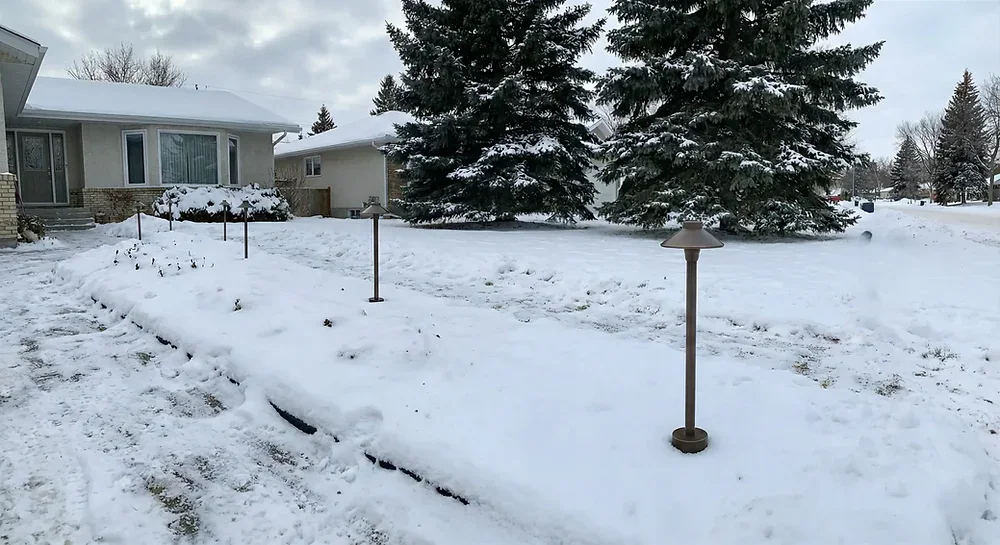
Dark materials absorb light, requiring more fixtures or higher wattage to achieve adequate illumination. Light materials reflect brilliantly, sometimes creating excessive brightness or unwanted glare. The colour, texture, and moisture content of landscape materials all influence lighting effectiveness, factors that become even more complex during Winnipeg’s winter months when snow adds another reflective variable.
Material-Specific Lighting Considerations
Black and Dark Brown Mulch: These popular choices absorb 85-90% of light, creating dramatic shadows and requiring strategic fixture placement. Path lights in areas with dark mulch need spacing 30-40% closer than those in light-colored settings. The upside? Dark mulch prevents light pollution and creates intimate, cozy outdoor spaces. It’s ideal around seating areas where softer illumination enhances ambiance.
When wet, dark mulch becomes even less reflective, potentially reducing visible light output by an additional 10-15%. Winter snow cover completely transforms these spaces. Suddenly, your carefully planned dark-mulch garden reflects 80% of light, creating entirely different nighttime aesthetics from November through March.
Red and Cedar Mulch: Mid-tone mulches reflect 20-35% of light, offering versatility. However, colour temperature matters significantly here. Warm white LEDs (2700-3000K) enhance the reddish tones, creating inviting earthiness. Cool white lights (4000K+) create visual clashing, making red mulches appear muddy or gray at night.
Design studies and field experience consistently show that red or cedar mulch looks noticeably better under warm‑white lighting than under cool‑white light. If your landscape features cedar or red mulch, specify warm-white fixtures exclusively for optimal visual harmony. For mulch sourcing and installation guidance, explore Ditchfield Soils’ premium mulch options.
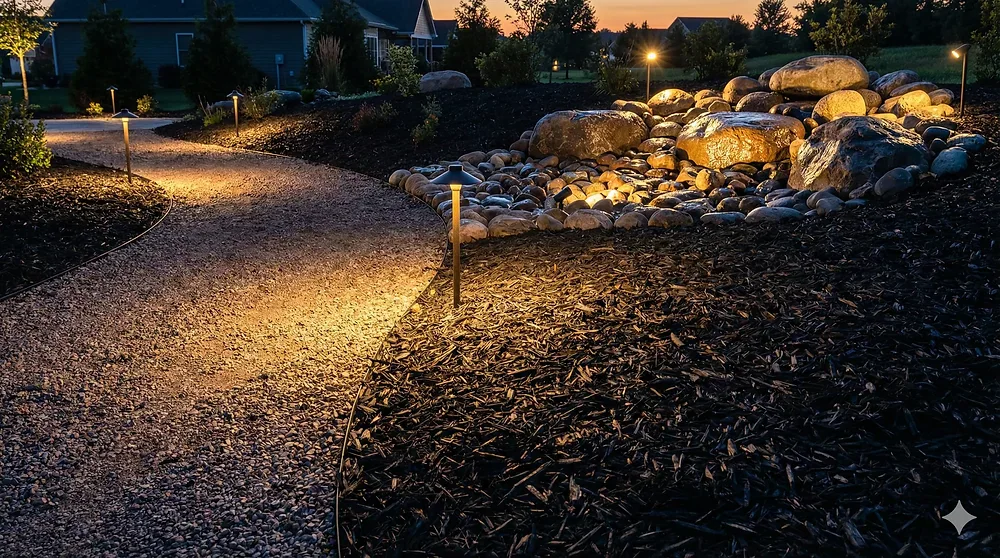
River Rock and Light Gravel: These materials reflect 45-65% of light, dramatically increasing effective illumination. A single path light in a light gravel setting provides coverage equivalent to 1.5-2 fixtures in dark mulch. However, this reflectivity creates challenges. Direct uplighting on light stones can cause uncomfortable glare, especially when viewing from elevated positions like decks or second-story windows.
The solution lies in directional lighting and fixture positioning. Use shielded path lights that direct illumination downward and forward rather than broadcasting in all directions. Position fixtures to graze light across gravel surfaces at shallow angles rather than flooding them from above.
Larger Decorative Stone (4-8 inches): The texture and gaps between larger stones create interesting shadow patterns while reducing overall reflectance compared to smooth gravel. These materials typically reflect 30-50% of light depending on colour, offering a middle ground. The irregular surfaces scatter light in multiple directions, softening harsh edges and creating depth.
Larger stones also provide stable platforms for low-voltage fixtures. Unlike mulch, which shifts and settles, stone surrounds keep fixtures level and properly positioned season after season. This stability is particularly valuable during Winnipeg’s freeze-thaw cycles, where ground movement can tilt or displace fixtures in less stable materials.
Strategic Combinations for Better Night Visibility
Path and Walkway Lighting: Combine light-colored edging stones with darker central paths for optimal visibility. This approach creates natural visual channels that guide movement even before the eye registers fixture light. Use ¾-inch limestone screening or light granite along path edges with darker mulch or dark grey gravel in the center. Position low-voltage path lights at the light-dark transition; reflection from the edging enhances visibility while the dark center reduces glare.
Landscape‑lighting case studies show that paths bordered with light‑reflective materials can often meet recommended illumination levels with noticeably fewer fixtures than dark‑edged paths. This efficiency translates to lower installation costs and reduced energy consumption.
Driveway and Hardscape Lighting: Avoid placing fixtures directly in light-colored gravel driveways, as the reflection creates excessive glare for drivers. Instead, mount directional lights on posts, walls, or bollards that cast light across the surface from edges. If ground-level lighting is necessary, use fixtures with integrated shields or louvres that prevent upward light spill.
For driveway borders, contrasting stone materials enhance definition. Dark stone edging against lighter gravel driveways creates clear boundaries that become even more visible with subtle edge lighting. Consider solar-powered edge markers filled with light-reflective tone for a no-wire solution that’s easy to adjust.
Garden Bed Illumination: Layer materials strategically in planted areas. Place darker mulch in beds to absorb light and eliminate distraction, then use lights or adjustable accent fixtures to highlight specific plants or features. This creates a visual hierarchy; your eye travels to illuminated focal points rather than being drawn to reflected ground surfaces.
When designing around mature trees or specimen plantings, use darker decorative stones or premium bark mulch within the immediate illumination zone. This allows uplighting to reveal tree bark texture and branching structure without ground reflection competing for attention.
Managing Snow and Winter Reflectivity
Winnipeg’s 4–5-month snow season completely changes outdoor lighting dynamics. Fresh snow reflects up to 80% of light, more than any landscape material you’ve selected. This can transform subtle lighting into overwhelming brightness or expose poorly planned fixture placement.
Design with this seasonal shift in mind. If summer lighting appears slightly dim against dark materials, it will likely perform perfectly against winter snow. Conversely, lighting that seems balanced with light gravel in August may create harsh glaring against snow in January.
Consider installing fixtures with adjustable output or smart controls that allow seasonal dimming. Many modern LED systems offer 20-100% dimming capability, letting you reduce output by 30-40% during snow cover months. This flexibility maintains appropriate illumination year-round while preventing light pollution during high-reflectivity conditions. For comprehensive winter preparation, review winter landscape lighting protection strategies.
Preventing Light Glare with Thoughtful Material Placement
Strategic Shielding: Use stone berms or edging to create physical barriers that block horizontal light spill. A 6–8-inch stone edge along paths acts as a natural shield, preventing light from washing into adjacent planted areas or neighbours’ properties. This is particularly effective in urban or suburban settings where properties sit close together.
Texture for Light Diffusion: Rough, irregular materials like natural fieldstone or textured concrete pavers scatter light in multiple directions rather than creating focused reflections. This diffusion effect softens lighting and reduces the harsh spots that occur with smooth, polished surfaces. When selecting decorative stone, prioritize natural cleft or tumbled finishes over polished options for areas near lighting fixtures.
Absorption Zones: Create “dark zones” with highly absorptive materials where light control is critical. Around seating areas, outdoor kitchens, or viewing platforms, use dark mulch or black Mexican beach pebbles to minimize ground reflection and reduce eye strain. These materials allow comfortable conversation and relaxation without competing with intentional focal lighting.
Practical Installation Tips
Test Before Committing: Before installing permanent lighting, use temporary battery-powered fixtures to preview how your chosen materials interact with different light sources. Test at night under normal viewing conditions, and if possible, during both dry and wet conditions. Material reflectance changes significantly when wet, sometimes increasing by 20-30%.
Layer Materials Deliberately: In areas with both uplighting and path lighting, layer materials by reflectance. Place the most absorptive materials (dark mulch) immediately around ground-mounted fixtures to reduce glare. Transition to more reflective materials (lighter stone) along paths and edges where enhanced visibility benefits safety. Use graduated stone sizes and colours to create smooth visual transitions.
Maintain Material Integrity: Mulch that breaks down or stone that settles changes reflectance over time. Refresh dark mulch annually; degraded mulch becomes lighter and more reflective, altering your lighting design. Rake and clean stone materials seasonally to remove debris that reduces their reflective properties. Plan for regular material replenishment as part of long-term landscape maintenance.
Consider Maintenance Access: Light-colored stones around fixtures show dirt, algae, and weather more noticeably than dark materials. If maintenance isn’t your priority, use darker transitional materials immediately around fixtures where handling and traffic are highest, then transition to lighter decorative materials in visible but less-disturbed areas.
Integrating Professional Design Expertise
Successful landscape lighting isn’t just about fixtures; it’s about understanding how every element of your outdoor space works together. Material selection, fixture placement, light temperature, and seasonal variation all contribute to creating spaces that function beautifully year-round.
The team at Ditchfield Soils specializes in helping Winnipeg homeowners and contractors select the right landscape materials for their specific applications, including projects involving outdoor lighting integration. Whether you’re planning new construction or refreshing existing landscapes, we provide the materials and expertise to make your vision succeed.
For complete lighting installation and design services that account for material interactions, our partner company Lawn ‘N’ Order offers comprehensive landscape lighting solutions built for Manitoba’s unique conditions.
Related Resources:
- Ditchfield Soils Product Catalogue
- Landscape Lighting Protection Guide
- American Society of Landscape Architects: Sustainable Site Lighting